
Understanding Careers in Optics Manufacturing
Welcome to
Optics Careers
Precision optics manufacturing turns raw glass and crystals into lenses, mirrors, windows, and assemblies used in aerospace, defense, medical devices, semiconductors, and research. This page gives you a clear picture of what the jobs actually are, what skills each role uses, and how to choose a training path through AmeriCOM and partner programs.
What you’ll
learn here
Optics manufacturing is hands-on, detail-driven work. You’ll see how a shop is organized, what technicians do day-to-day, and how quality is measured. We’ll break down: core processes (grinding, polishing, coating, inspection), common tools (gauges, interferometers, profilometers), and career progression from entry-level operator to specialist and engineer roles.
Common roles
OPTICS PRODUCTION OPERATOR
Entry point into the shop. You’ll learn how work orders move, how parts are handled and tracked, and how to safely run basic equipment. Expect hands-on tasks like loading fixtures, cleaning parts, measuring simple dimensions, and following process travelers.
Typical skills: safety, attention to detail, basic measurement, documentation.
OPTICS TECHNICIAN
The core craft role in precision optics. Technicians grind, smooth, and polish parts to meet tight specifications, then verify results with measurement tools. You’ll build judgment for material removal, surface quality, and how to troubleshoot process drift.
Typical skills: tolerances, metrology basics, process control, glass handling.
METROLOGY & QUALITY
Inspection keeps the whole shop honest. These roles focus on measuring surface form, roughness, thickness, wedge, and cosmetic defects — and communicating results back to manufacturing. Often the fastest path to specialization.
Typical skills: inspection methods, reporting, root-cause thinking, standards.
Career pathways
How people grow in a precision optics shop.
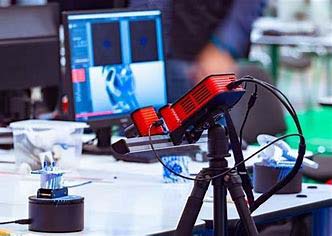
METROLOGY
See what the role does day-to-day, the tools used, and the skills to build next.
LIGHT AND LASERS
See how light behaves, the tools used, and the skills to build next.
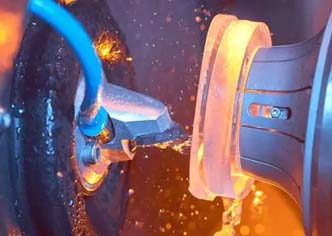
GRINDING & POLISHING
See what the role does day-to-day, the tools used, and the skills to build next.
MANUFACTURING ENGINEERING
See what the role does day-to-day, the tools used, and the skills to build next.
Training &
certificates
Start with online fundamentals, then move into process-focused modules (grinding & polishing, metrology, coatings, systems). Pair online learning with hands-on workshops through AmeriCOM’s partner network to build experience and confidence.
Tip: If you’re brand new, begin with shop math + safety + measurement basics, then pick one process track to go deeper.
What employers look for
Precision mindset: do it right, then do it the same way every time.
Documentation: write clear notes and follow travelers.
Measurement comfort: know what you measured, how, and why it matters.
Team communication: flag issues early and ask good questions.
Entry paths
Operator → Technician: learn the flow, then build a specialization.
Technician → Specialist: metrology, coatings, CNC, or systems assembly.
Specialist → Lead / Engineer: process control, troubleshooting, continuous improvement.
Ready to Start?
AmeriCOM can help your institution launch or expand optics training by connecting curriculum resources, industry advisors, and outreach strategies that build a sustainable pipeline.